
Drug & Alcohol Rehab for Healthcare Professionals
Addiction Treatment For Healthcare Workers
Licensed healthcare professionals face a distinctive array of challenges when navigating the complexities of substance use and addiction. The stigma surrounding these issues, coupled with the emotional weight of helping patients who struggle with dependency, can significantly strain their ability to provide effective care. At Recovery First Treatment Center, located in the heart of Hollywood, Florida, we offer comprehensive support and specialized programs tailored to meet these professionals' unique needs. Our dedicated team is committed to providing compassionate treatment that addresses the physical, emotional, and psychological aspects of recovery, ensuring that both patients and healthcare providers have the resources they need to foster healing and resilience.
Challenges Faced by Healthcare Professionals

Medical and healthcare professionals may face unique challenges when struggling with substance misuse or addiction. You or your loved one may be experiencing:
- Stressful work situations, including trauma and trauma-related incidents.
- Burnout associated with work.
- High expectations, self imposed or otherwise.
- Access to medications and substances most other people don’t have.
- Worries over losing licensing because of substance use.
- Fears about the ability to continue in the profession.
Similar to the experiences of the general population, evidence-based drug and alcohol rehab tailored for medical professionals can lead to significant and positive health outcomes. Seeking treatment for a substance use disorder does not necessarily mean that you have to jeopardize your career. At Recovery First, we collaborate closely with organizations such as the Intervention Project for Nursing (IPN) and the Professional Resource Network (PRN) to ensure that your professional license is safeguarded throughout the recovery process.
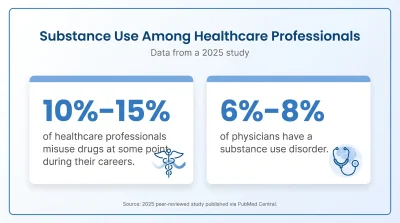
Recognizing the unique challenges that healthcare professionals encounter when dealing with addiction is crucial for effective recovery. These challenges may stem from the high-stress environment of medical practice, the pressure to maintain performance standards, and the stigma associated with seeking help. It is vital to address these issues directly to pave the way for a successful recovery journey.
By understanding the specific obstacles faced by healthcare workers and learning how they can be managed, individuals can take meaningful steps toward achieving sobriety and reestablishing their professional lives. Connecting with supportive resources and programs dedicated to helping medical professionals can mark an essential first step in this transformative process toward recovery and well-being.
| Healthcare Profession | Why They Have Higher Risk of Addiction |
|---|---|
| Anesthesiologists | Direct daily access to potent opioids and anesthetic agents (such as fentanyl and propofol), combined with high-pressure clinical decision-making. |
| Nurses (ICU, ER, Anesthesia) | Long shifts, trauma exposure, emotional exhaustion, and easy workplace access to controlled medications place nurses—especially in critical care settings—at heightened risk. |
| Emergency Medicine Physicians | Constant exposure to trauma, unpredictable shift work, high burnout rates, and the need to make rapid, high-stakes decisions contribute to elevated substance misuse risk. |
| Surgeons | Long operating hours, perfectionism, sleep deprivation, and chronic stress—often paired with a culture that discourages asking for help—create vulnerability to alcohol and prescription drug misuse. |
| Psychiatrists & Mental Health Clinicians | Emotional weight of patient care, secondary trauma, and access to psychotropic medications can heighten risk, particularly for alcohol and benzodiazepine misuse. |
| Pharmacists | Immediate, continuous access to a wide range of controlled substances, combined with high-volume workloads and staffing pressures, increases risk of diversion and misuse. |
| Dentists & Oral Surgeons | Frequent prescribing of opioids, professional isolation in solo or small practices, and high rates of occupational stress are contributing risk factors. |
| Paramedics & EMTs | Repeated exposure to traumatic events, high-stress emergency response, shift work, and access to controlled medications all contribute to elevated rates of PTSD and substance misuse. |
| Medical Residents & Interns | Extreme workloads, sleep deprivation, financial stress, and cultural pressure to appear unshakable can drive alcohol and stimulant misuse during training years. |
| Critical Care & Trauma Staff | Frequent exposure to death and life-threatening situations, plus compassion fatigue, elevates risk for both substance use disorders and co-occurring mental health conditions. |
| Veterinarians | High rates of burnout, compassion fatigue, access to ketamine and opioids, and elevated suicide risk make veterinary professionals a particularly vulnerable group. |
Highly-Skilled Addiction Specialists For Healthcare Workers

If you’re looking for a premier addiction treatment program for medical workers, Recovery First can help. Our treatment team at our Hollywood location includes licensed mental health professionals, master’s-level clinicians, certified addiction professionals, advance practice nurses, and other highly skilled professionals. And some members of the team know firsthand the struggles that come from recovery in the healthcare profession.
Dr. Seely is Recovery First’s Medical Director, and has treated impaired professionals for more than 30 years. He has a unique understanding of the care that must be provided to maintain sobriety and to have a successful career after treatment, as he has gone through an impaired professionals’ program himself. Dr. Seely has more than 31 years in recovery.
After achieving recovery, Dr. Smith, Recovery First’s addictionologist, has dedicated his career to assisting others who struggle with addiction. Dr. Smith has an intricate knowledge of treatment for healthcare professionals, including monitoring programs.
Dr. Dolin is the facility’s internal medicine doctor, and provides mind-body treatment in conjunction with psychiatric care.
Evidence-Based Treatment for Healthcare Professionals

When you attend our Healthcare Professionals Program at Recovery First, you can expect evidence-based treatment and therapy, including:
- Motivational Interviewing (MI)
- Cognitive Behavioral Therapy (CBT)
- Acceptance and Commitment Therapy (ACT)
- Dialectical Behavioral Therapy (DBT)
Recovery First is dedicated to reaching out to healthcare professionals who are facing challenges with addiction, offering support tailored to their unique circumstances. We provide a comprehensive array of treatment options designed to cater to various needs and preferences. Our treatment settings include:
Medical Detox
A structured program that ensures safe withdrawal from substances, supervised by qualified medical staff. This phase focuses on stabilizing patients physically while addressing the initial challenges of addiction.
Inpatient Treatment
An intensive residential program where individuals receive round-the-clock care in a supportive environment. This setting allows for immersive therapeutic activities and structured routines that promote healing and recovery from addiction.
Outpatient Treatment
A flexible option that enables individuals to participate in recovery programs while maintaining their daily responsibilities. This setting offers various services, including counseling, group therapy, and education, allowing for continued support as individuals work toward long-term sobriety.
Our goal is to create a safe and compassionate atmosphere where healthcare professionals can find the help they need to reclaim their lives.
During your treatment at our healthcare professionals rehab program, you, the other members of the programs, and our qualified staff will help you explore trauma, relapse prevention, co-occurring issues, anger management, grief and loss, with process groups, 12-step and SMART recovery approaches, and holistic options such as yoga, nutrition, and mindfulness.
Our licensed marriage and family addiction therapists provides additional opportunities for patients and their families to understand addiction and how to mend the family and understand family systems.
What We Offer
Our Excellent Staff
Our team of dedicated, compassionate and highly skilled professionals is here for you or your loved one every step of the way.
Accreditation
Recovery First's Healthcare Professionals Program is approved by the state, and the facility has Joint Commission and CARF accreditations.
Re-Entry Planning
For many, it's absolutely possible to transition back into the healthcare profession. We're here to help you make it happen.
Education
You're uniquely positioned to learn and understand addiction, so we provide lessons and a training program on the neurobiology of addiction.